
The national species identification infrastructure, ARISE, is receiving a technological upgrade. A 3.2-million-euro grant makes the five-year AccellARISE upgrade possible. With this funding, Naturalis Biodiversity Center and the Westerdijk Fungal Biodiversity Institute can use new technologies to identify the most hidden Dutch plant, animal, and fungal species more quickly. This is highly necessary, because effectively protecting our biodiversity requires precise knowledge of where different species occur.
Speeding up the identificationof hidden species
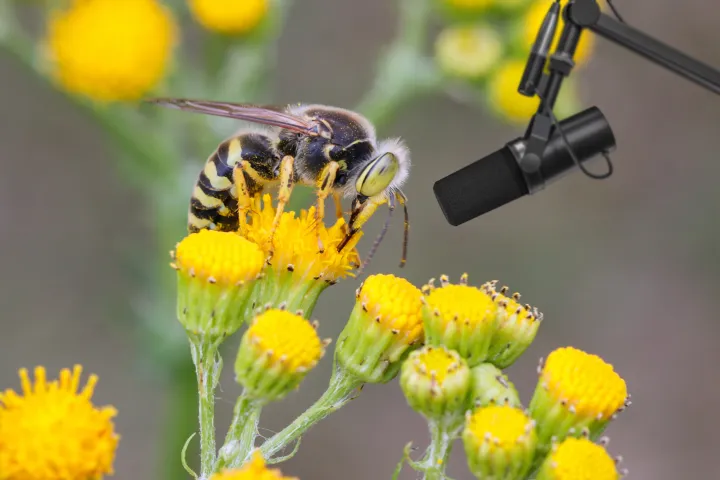
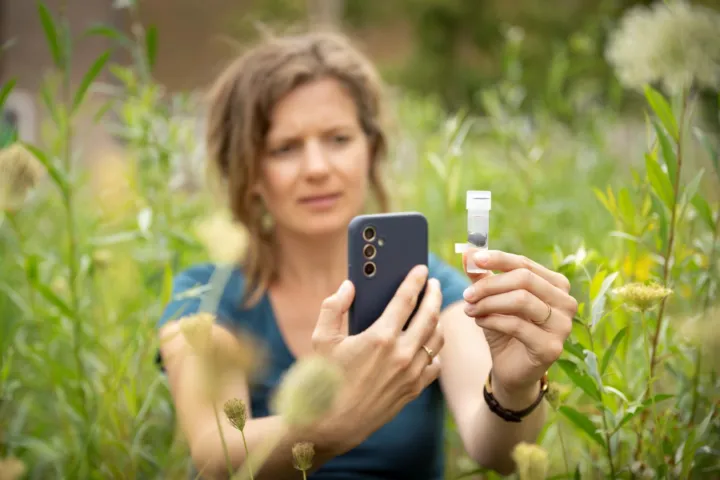
Since its start in 2020, ARISE has already collected the genetic codes, sounds, and images of approximately 80% of all Dutch species. This research infrastructure allows anyone to identify species across the Netherlands using an extensive DNA reference library and automated image and sound recognition. The remaining 20%, however, is more difficult to document. This group consists of rare, microscopic, or fragile organisms such as fungi, algae, plankton, and tiny insects. Because these species are nearly impossible to identify using standard methods, this part of nature remains largely invisible to researchers and policymakers.
To accelerate the identification of these missing species, the Dutch Research Council (NWO) has awarded the AccellARISE grant. This boost enables a targeted expansion of the existing ARISE infrastructure, fast-tracking the recognition of this hidden biodiversity.
Powerful laboratory technologyand historical collections
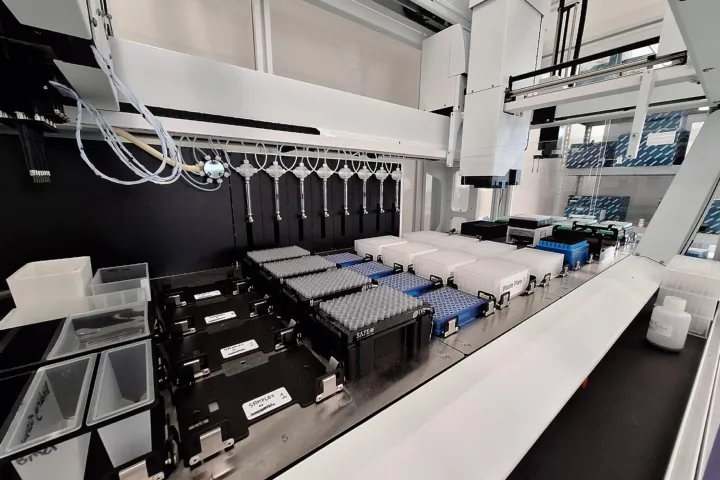
Technology has advanced rapidly since 2020. With the introduction of new robotics, AccellARISE will make it possible to automatically sort and analyze organisms smaller than two millimeters. High-tech sorting robots and microscopic cameras (micro-imaging) will photograph and sort thousands of minuscule organisms from, for example, water or soil samples. Additionally, genome skimming – a modern DNA technique – makes it possible to retrieve the correct genetic code even from historical museum specimens. This allows the reference databases for both DNA and images to be built up simultaneously and at a faster pace.
Green ITand smarter AI
Alongside these new analytical techniques, ARISE’s central database (the 'Biocloud') is also receiving an upgrade. This is essential, as the volume of data from cameras, audio recorders, and DNA samples is growing rapidly. The upgrade will ensure that the infrastructure can keep processing this large stream of data. At the same time, AI models are being optimized to better recognize rare species, and the necessary computing power is being made more energy-efficient and eco-friendly.
Prof. Dr. Koos Biesmeijer, lead applicant and scientific director of Naturalis, emphasizes the importance of these innovations: “Technological innovations in DNA methods, image recognition, and AI provide excellent opportunities for biodiversity research. This NWO funding allows us to guarantee that our ARISE species identification infrastructure remains state-of-the-art and future-proof.”
Prof. Dr. Wieland Meyer, director of the Westerdijk Institute, also stresses the necessity of these technological upgrades: “Fungi are the invisible key players in our ecosystems; they clean up, feed the soil, and connect nature, but they are difficult to find. With AccellARISE, we can identify this hidden biodiversity quickly and reliably on a large scale. Only when we understand this microscopic world can we effectively protect nature as a whole.”


Readyfor growing demand
Completing the inventory of Dutch species is of great scientific importance. Understanding ecosystems is only possible when we know all of their individual elements. At the same time, the societal and economic demand for reliable biodiversity data is rising. Thanks to targeted investments from AccellARISE, the ARISE infrastructure is being optimized to handle this growth, making species identification more accurate and accessible to a broad and growing audience.
For Naturalis, this boost is a vital link in a larger initiative, building on the organization's ongoing efforts to develop a species identification infrastructure that maps biodiversity in near-real-time. Combining scientific expertise with AI, natural history collections, and modern (DNA) techniques accelerates the mapping of the complete web of life. This makes changes in nature faster and easier to measure. With species disappearing at a rapid pace, this has never been more important.
More information
This is a joint press release by Naturalis Biodiversity Center and the Westerdijk Fungal Biodiversity Institute.
AccellARISE has a duration of 5 years and a total budget of €3.2 million (including €3 million for Naturalis and €150,000 for the Westerdijk Fungal Biodiversity Institute). The project is funded by NWO's LSRI-Upgrade 2025 round and serves as an upgrade to ARISE. Following its initial development phase starting in 2020, ARISE officially went live in November 2025 as a joint platform of Naturalis, the University of Amsterdam (UvA), the Westerdijk Fungal Biodiversity Institute, and the University of Twente.
For more information about this project, please contact lead applicant Prof. Dr. Koos Biesmeijer (koos.biesmeijer@naturalis.nl). For general inquiries, please contact the communications department at Naturalis.
The images above and additional film and photo material can be found in this ARISE press folder. They may be used free of charge, but only with mention of the credits listed in the filename.
Related pages

eDentity: a national eDNA infrastructure
Step closer to advanced monitoring of our biodiversity
Knowing Nature in the Netherlands: The ARISE research infrastructure for species ID