As the most recent addition to the Collections department, I care for the approximately 7 million objects that make up the Botany collection. I work together with Naturalis researchers, students, and volunteers to ensure the collection remains accessible for research and study.
Keywords
research, collections care, Botany
The Collection
The herbarium collection consists of approximately 7 million specimens. The majority of these are mounted on herbarium sheets, but we also hold one of the world’s largest wood collections ("xylotheque", from the Greek for "wood repository"), as well as collections of fungi, mosses, and lichens—stored in small paper envelopes ("convolutes")—and specimens preserved in liquid.
The herbarium collection at Naturalis totals approximately 7.3 million specimens. The largest sub-collection by far is the vascular plants, which numbers about 4.5 million.. Other significant sub-collections include the wood specimens, fungi, lichens, mosses, and algae.
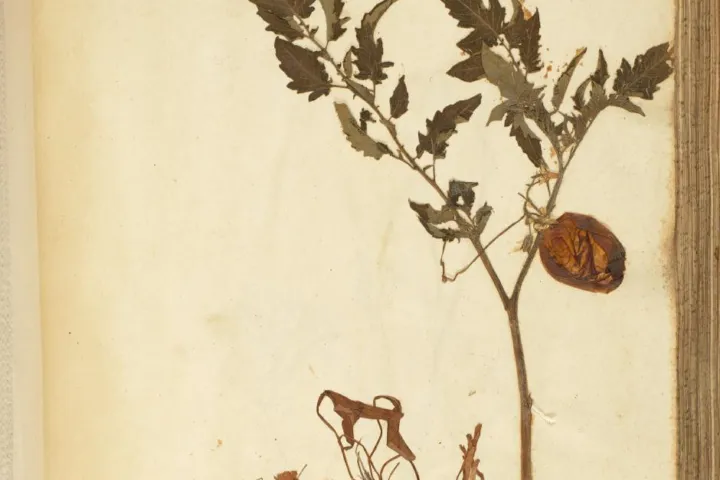
As the national collection, the focus lies on Dutch flora (including fungi), as well as that of South America and Southeast Asia. The most recent specimens are still being collected, while the oldest item is a sixteenth-century bound collection of plants.
The herbarium collection is the result of the merger of four university herbaria—those of Leiden, Utrecht, Wageningen, and Amsterdam—the oldest of which was established in 1816. Through this consolidation of collections, Naturalis manages a global collection of plants and fungi.
The collection is primarily used for scientific research, though it is also used for exhibition purposes.


Current topics
A selection of topics on which I'm currently working.