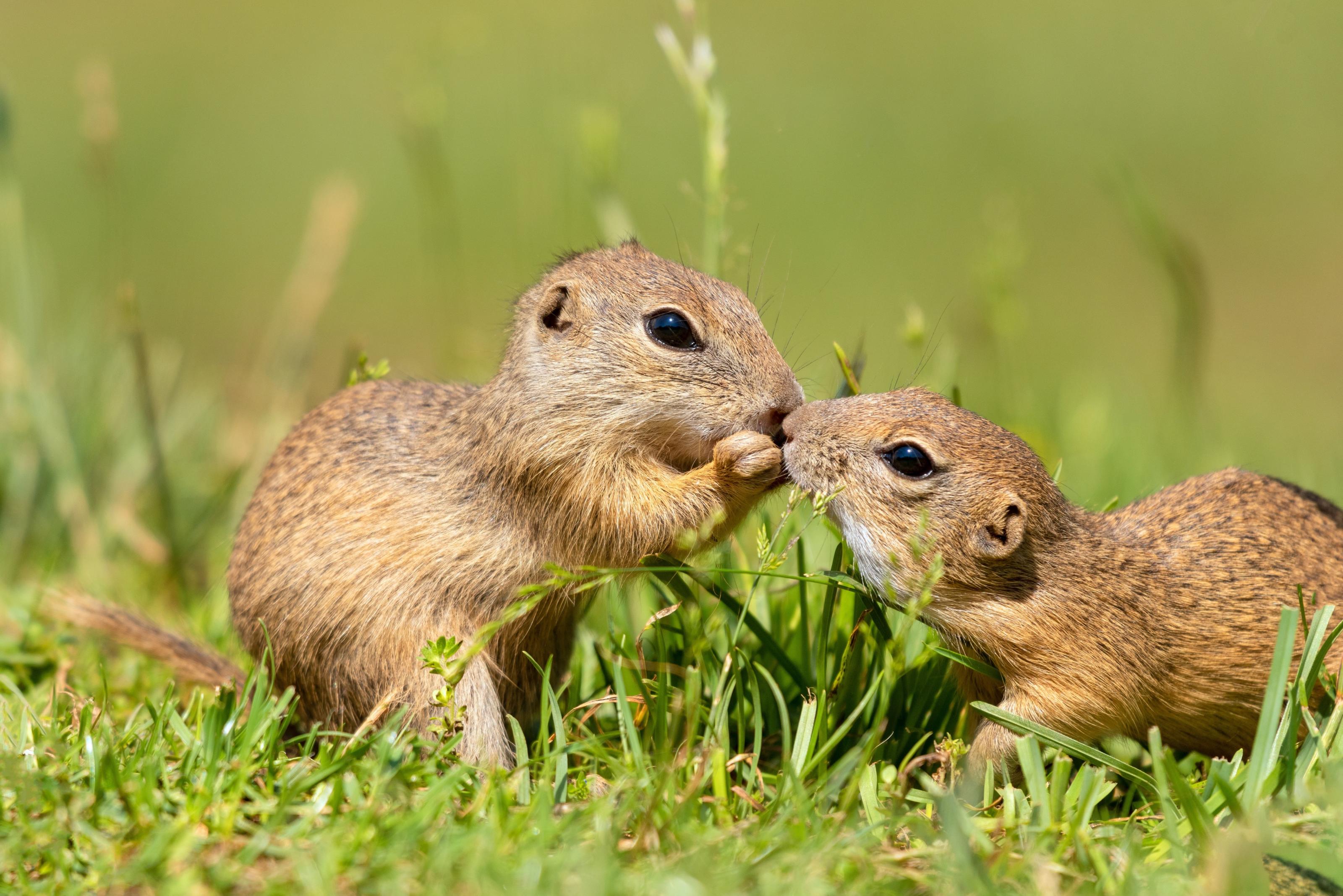
Squirrels are an incredibly ecologically diverse family. They occupy a wide range of niches from Arctic climates to tropical environments, and they have members that burrow, live on the ground, climb trees, and even glide. Living in different environments requires different neuroanatomical and sensory adaptations. This project is a collaboration between Dr. Ornella Bertrand (Institut Català de Paleontologia Miquel Crusafont) and Dr. Selina-Viktor Robson (Naturalis) to investigate the effects of ecology on the brain and senses in squirrels.
There is a clear connection between ecological variables, sensory systems, and the brain in mammals. For example, enhanced vision in tree squirrels is correlated to food foraging (spatial memory) and navigating in a complex 3D environment. However, correlation does not equal causation, and the environments in which these adaptations evolved are not necessarily preserved today, meaning that we cannot solely rely on recent animals to understand brain and sensory evolution. This is why we turn to the fossil record. We can use digital models produced from CT scans of these fossils to study how and when certain neurological and sensory adaptations emerged in the squirrel lineage, allowing us to better understand the interplay between environment, ecology, and brain function. This is particularly important for squirrels because some species are fixtures of urban wildlife while others are threatened by urbanization and environmental disruption. Understanding their brain and sensory evolution enables us to make more informed decisions about conservation and urban planning with our furry friends in mind.
Subprojects
- Squirrel Brain Evolution (lead by Dr. Bertrand) – While brains are almost never preserved in the fossil record, we can study brain shape by using cranial endocasts. This approach involves making digital models of the inside of the cranial cavity. We are then able to measure these models to investigate how different brain regions have changed over time.
- Squirrel Ear Region Evolution (lead by Dr. Robson) – The ear region includes a complex series of bones and soft tissues that play a role in hearing and balance. We can make models of these structures even millions of years after death and use them to learn how sensory systems evolved in squirrels occupying distinctly different niches.
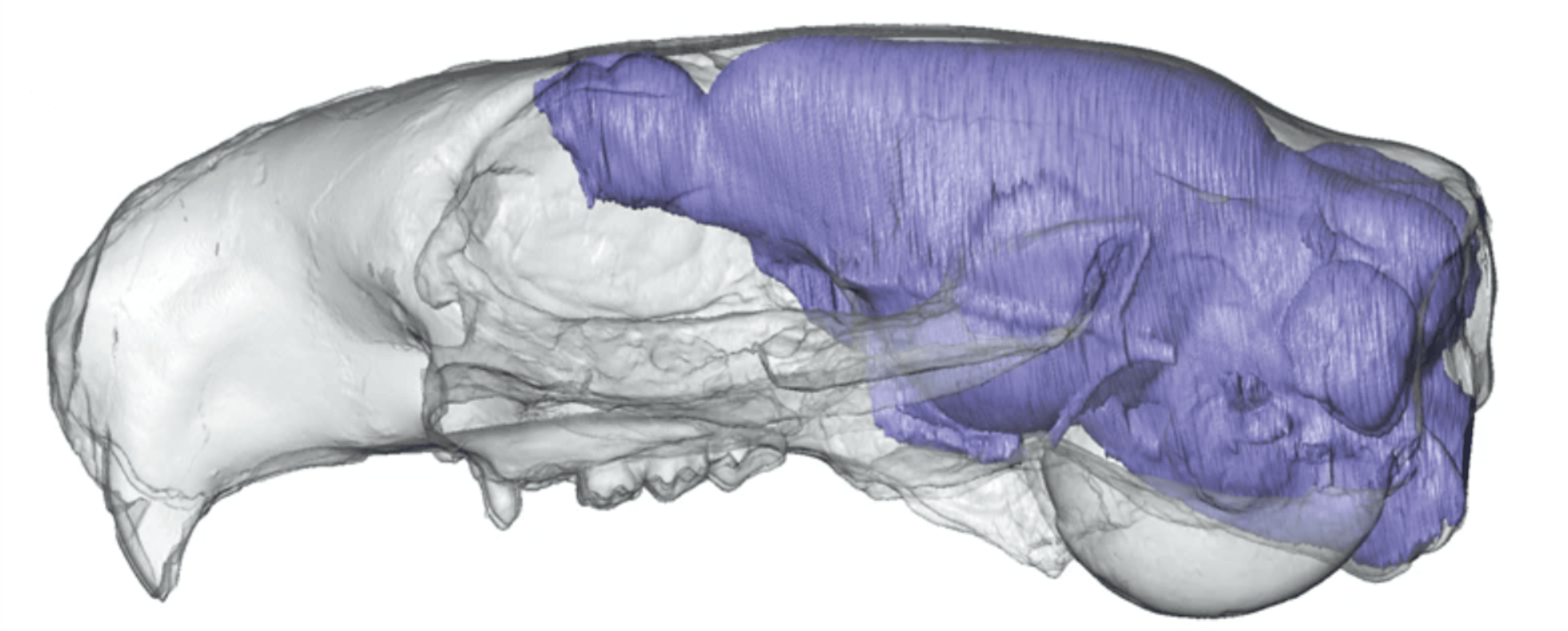
Image is modified from Fig. 1 of Bertrand, O.C., Püschel, H.P., Schwab, J.A. et al (2021).
Publications relevant to this research
- Bertrand, O.C., Krubitzer, L. The functional adaptations of mammalian brain structures through a behavioural ecology lens. Nat. Rev. Biodivers. 1, 703–716 (2025).
- Bertrand, O.C., Püschel, H.P., Schwab, J.A. et al. The impact of locomotion on the brain evolution of squirrels and close relatives. Commun Biol 4, 460 (2021).