

Snowdrops are among the earliest blooming flowers, marking the transition from winter to spring. They are cultivated in the Netherlands for centuries, but we still do not know where they came from.
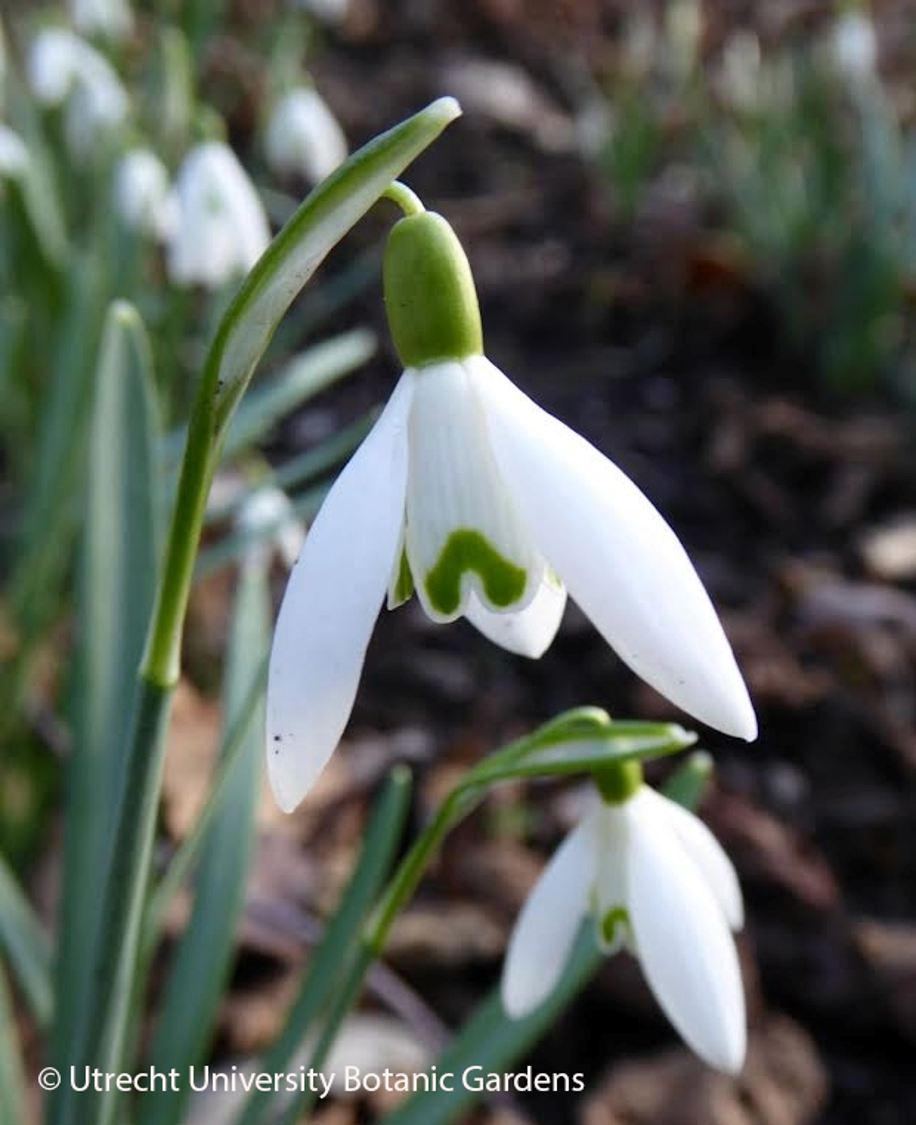
Common snowdrop (Galanthus nivalis) grown at the Utrecht University Botanic Gardens.
Backgroundand context
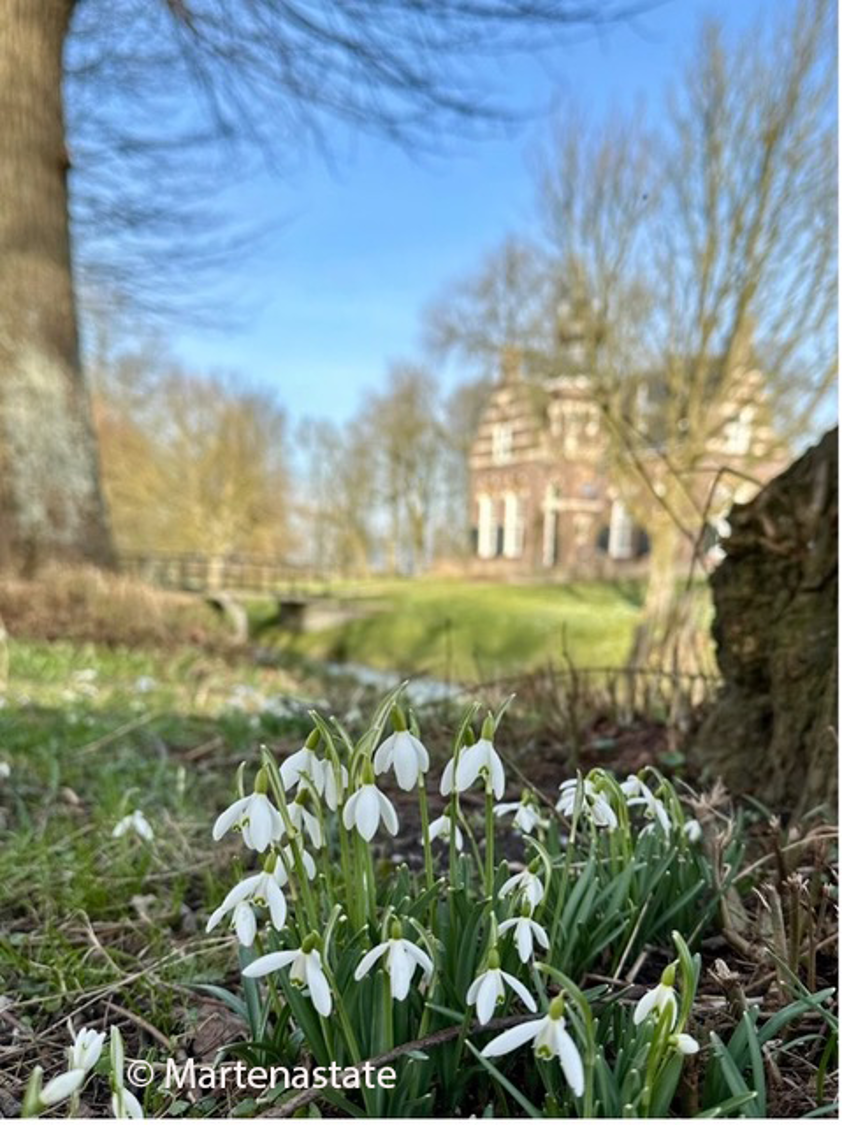 The common snowdrop (Galanthus nivalis) is a native species of southern and eastern Europe, which was introduced in the past in Dutch gardens and became naturalized. It belongs to the so-called stinzenplants, a group of spring flowering species of botanical and cultural value, mostly bulbs, which grow wild in historical gardens of castles and estates across the Netherlands. The name ‘stinzen’ comes from the Frisian ‘stiens’ which refers to the houses of stone where these flowers were originally planted. Snowdrops are believed to be in cultivation in the Netherlands since the Middle Ages, however we do not know who brought them originally, when and from where. Considering the variety of names appearing in historical literature and the morphological variation depicted in illustrations it can be assumed that more species or cultivars were grown.
Snowdrops at Martenastate, Friesland
Objectivesand goals
This projects aims to explore the origins of naturalized snowdrops in Dutch and northern European historical gardens based on botanical archival information. The questions to be answered include:
- When were the first snowdrops brought to the Netherlands and northern Europe, from where and by who?
- Are there different species or cultivars of snowdrops mentioned in historical literature, and which ones?
Materialsand methods
You will use historical textual and visual evidence to reconstruct the history of introduction of snowdrops in the Netherlands and Norther Europe. You will do this by searching information about snowdrops in digitized historical botanical publications, herbarium specimens, collections of drawings and historical archives. You will record the original names attributed to snowdrops in these sources, and the information mentioned about their morphology and provenance. Combining the morphological descriptions and illustrations, you will try to identify the different species and cultivars of snowdrops present in historical sources.
Studentrequirements
An interest on plants or having followed a course on flora or plant diversity is a plus.